.webp) playonlineh5.com
playonlineh5.comPalworld and the Hidden Problem of Base Automation
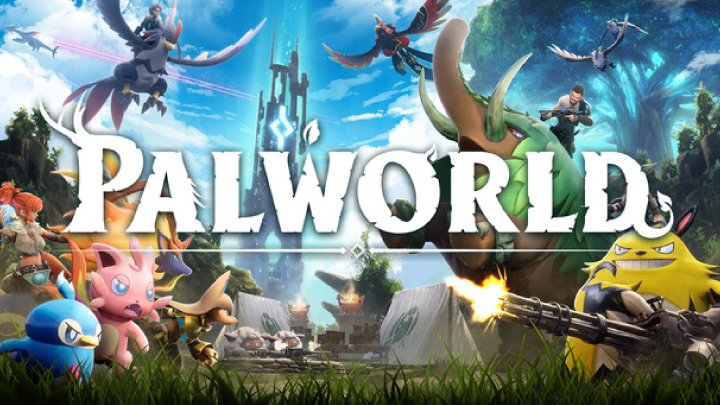
Palworld became popular because it combines creature collection, survival, crafting, exploration, combat, and base construction in one world. Pals are not simply creatures to collect. They can fight alongside the player, transport materials, grow crops, generate resources, craft equipment, and perform repetitive tasks around a base.
That last feature is one of Palworld's most interesting ideas and also one of its most difficult design problems. Base automation dramatically reduces repetitive work, but it can eventually make the survival economy feel disconnected from exploration. Once a player establishes an efficient workforce of Pals, many resources become passive income. The player stops gathering, producing, and transporting materials manually because the base handles those jobs continuously.
This creates a specific long term problem: Palworld can gradually transform from a survival adventure into a resource management simulator where the most efficient strategy is often to stay near a highly optimized base. The issue is not that automation exists. Automation is one of the game's defining strengths. The problem occurs when automation becomes so efficient that it removes the reasons players originally needed to explore, fight, gather, and interact with the world.
This article examines how that transition happens, why it becomes more noticeable as a world develops, how Pal assignment and resource production contribute to it, and what design changes could preserve automation while keeping exploration meaningful.
The First Base Makes Manual Survival Feel Meaningful
Manual Gathering Creates Early Decisions
During the opening hours, Palworld's survival loop is relatively demanding. Players have limited equipment, limited carrying capacity, limited food, and relatively primitive crafting infrastructure. Gathering wood and stone personally is slow, but the effort feels appropriate because every resource has immediate importance.
Finding a suitable location for the first base is therefore a meaningful decision. Players think about nearby resources, terrain, Pal availability, and access to important locations. A base near useful resources can dramatically reduce the amount of travel required.
Before automation becomes powerful, players must constantly decide how to spend their time. They might gather materials for a new weapon, search for food, hunt Pals, or explore a new area. Because time and inventory space are limited, each activity competes with another.
Common early priorities include:
- Collecting wood and stone
- Finding food
- Gathering ore
- Crafting better equipment
- Searching for useful Pals
- Exploring nearby landmarks
This competition between activities is important. Survival games become interesting when players cannot efficiently do everything at once. The player must make choices, and those choices create the feeling of progression.
Assigning Pals Changes the Meaning of Work
Creature Collection Becomes Workforce Optimization
Once players begin assigning Pals to base tasks, the economic structure changes dramatically. A Pal that mines, transports, plants, waters, or generates resources is effectively another worker operating independently of the player.
This is a clever system because it turns creature collection into something functional. A Pal is no longer valuable only because of combat statistics or rarity. Its suitability for a particular task can make it valuable to the entire base.
Players begin evaluating Pals according to their suitability for production. A Pal with desirable work abilities can be more useful to a developed base than a stronger combat creature.
This produces a second layer of progression:
- Finding suitable workers
- Assigning them to specialized tasks
- Improving production speed
- Reducing downtime
- Expanding automated tasks
The problem is that this optimization can eventually become more important than the world outside the base. Once players realize how much passive production can be generated, gathering resources personally starts to feel inefficient.
Resource Automation Gradually Removes Scarcity
The Difference Between Convenience and Elimination
Scarcity is one of the most important ingredients in a survival game. When a resource is difficult to obtain, players have a reason to explore. When it becomes abundant, that motivation decreases.
Palworld's base system can progressively eliminate this scarcity. A well designed production chain allows players to generate food, materials, crafted items, and other necessities without constantly leaving their base.
Automation is healthy when it reduces repetitive work while preserving the importance of obtaining resources. The problem appears when automated production becomes so efficient that the original resource gathering activity almost disappears from normal play.
Consider the progression:
- The player manually gathers a resource.
- The player assigns a Pal to help gather it.
- The player expands the production infrastructure.
- The resource becomes increasingly abundant.
- The player stops gathering it personally.
- The resource becomes a background number in storage.
At the end of this progression, the player has technically become more powerful, but the world has become less relevant to that resource.
Ore and Industrial Materials Reveal the Problem Clearly
From Expedition to Supply Chain
Ore represents one of the clearest examples of the tension between exploration and automation. In the early game, obtaining enough metal requires substantial effort. Players must locate deposits, carry equipment, manage inventory space, and potentially fight hostile creatures while gathering.
As the base becomes more sophisticated, the player's relationship with ore changes. Instead of searching for every deposit personally, the player can build systems designed to continuously produce or process important materials.
The player's question changes from “Where can I find this?” to “How can I produce enough of this automatically?”
That is a major psychological transition.
Exploration is based on uncertainty. Production is based on predictability. Once the player has solved the production problem, there is less reason to interact with the environment.
The Efficiency Trap
The more efficient a base becomes, the less attractive manual gathering becomes. This creates a strange situation in which improving the player's infrastructure can reduce the number of activities they want to perform personally.
Progress therefore has a hidden cost. The player becomes stronger but potentially less engaged with the world that made progression interesting in the first place.
Transport Pals Create a Second Layer of Automation
The Base Starts Behaving Like a Factory
Resource gathering alone does not completely automate a base. Materials must also be transported between locations. Palworld's transport mechanics solve this problem by allowing Pals to move items around the base.
This is convenient and satisfying when a base is small. Watching Pals move materials between production stations makes the settlement feel alive. The problem becomes more complicated when players create large industrial bases containing many production chains.
Once gathering and transportation are automated, the player increasingly becomes a supervisor rather than a worker.
A typical automated chain can involve:
- A Pal gathering a raw resource
- Another Pal transporting it
- A crafting station processing it
- Another Pal moving the finished material
- A storage system collecting the output
The player may only need to collect the final product.
This is impressive from a systems design perspective, but it also demonstrates the central problem. The player's direct interaction with the resource economy becomes smaller as the base becomes more sophisticated.
Food Automation Changes the Survival Loop
When Survival Needs Become Background Systems
Food is another important system affected by automation. In a traditional survival game, food requires regular attention. Players must hunt animals, grow crops, cook meals, or explore for alternatives.
In Palworld, agriculture and food production can become increasingly automated through dedicated Pals and production stations. Once a reliable food system exists, hunger stops being an active survival concern.
Removing repetitive hunger management can improve the experience. Players generally do not want to spend most of their time performing chores. However, if food becomes completely effortless, another source of interaction disappears.
The same pattern appears repeatedly:
Manual survival creates a problem. Automation solves the problem. The solved problem disappears from gameplay.
This is not necessarily bad. The problem is cumulative. When food, ore, transportation, crafting materials, and other necessities are all automated, the player may lose many of the small survival decisions that previously gave the world purpose.
Base Optimization Can Become More Important Than Exploration
Optimization Is Fun but Self Reinforcing
As players become familiar with Palworld's systems, optimization becomes increasingly attractive. A poorly organized base creates unnecessary walking, inefficient production, and wasted storage space. A well designed base can dramatically increase output.
This creates a new form of gameplay that resembles management simulation. Players start thinking about layout, workflow, production speed, worker suitability, and storage efficiency.
Building a better base creates immediate rewards. Better production creates more resources. More resources allow better equipment. Better equipment makes the player stronger. Stronger equipment makes resource gathering easier.
The loop is powerful:
- Improve the base.
- Increase production.
- Acquire better equipment.
- Improve combat capability.
- Expand the base again.
However, exploration is no longer necessarily at the center of this loop. It becomes one method of obtaining new blueprints, Pals, or discoveries rather than the primary source of progression.
The Efficiency Versus Adventure Conflict
An optimized base rewards staying home. An unexplored world rewards leaving home. When the base becomes sufficiently productive, the economic incentive increasingly favors staying home.
That conflict is the heart of the problem.
Powerful Automation Can Reduce the Value of New Resources
Preparation Can Become Too Easy
A new resource should ideally create a new reason to explore. Players should encounter it and immediately wonder what it can be used for. However, if a player's base already produces large quantities of existing materials, additional resources may have less impact.
Players with highly developed production systems can approach new content with large reserves. This reduces the economic pressure that would otherwise make new discoveries exciting.
Preparation is an important part of survival gameplay. Before entering a dangerous region, players should ideally consider what they need.
That might include:
- Food
- Healing items
- Ammunition
- Weapons
- Armor
- Building materials
Automation can reduce the importance of this preparation because many supplies are already available in storage.
When preparation becomes effortless, dangerous expeditions lose some of their logistical tension. The player can simply return to base, collect whatever is required, and leave again.
Automation Also Changes Pal Identity
From Creature Companion to Employee
One of Palworld's most interesting ideas is that Pals can have multiple identities. A creature can be a combat partner, a mount, a collector, a worker, or a transportation assistant.
Automation strengthens the worker identity, but it can also create a tendency to judge Pals primarily by productivity.
A Pal with excellent combat abilities might receive less attention if another Pal has better work suitability. Players begin sorting their collections according to economic usefulness.
This creates categories such as:
- Combat Pals
- Mining Pals
- Transport Pals
- Farming Pals
- Crafting Pals
Specialization is useful, but excessive specialization can make creature collection feel like workforce management rather than discovery.
The Strongest Pal Is Not Always the Most Interesting Pal
A creature becomes memorable when players develop an attachment to it because of how it performs during adventures. If its main value becomes production efficiency, the emotional connection can become weaker.
The design challenge is therefore not simply balancing work suitability. It is ensuring that automation supports the fantasy of owning and caring for Pals instead of reducing them to statistics on a production chart.
Exploration Needs Rewards Automation Cannot Replace
Discovery Should Provide Unique Progression
The most effective solution does not require removing automation. Instead, exploration needs rewards that cannot simply be reproduced through a base.
If every important material can eventually be produced automatically, then exploration must provide different types of value.
Potential exploration rewards could include:
- Rare Pal behaviors
- Unique environmental events
- Special structures
- Unique crafting recipes
- Rare cosmetic discoveries
- Story fragments
- World specific challenges
These rewards would remain valuable even when the player's base is extremely efficient.
The important principle is simple:
Automation should answer the question “How can I produce more?”
Exploration should answer the question “What exists beyond what I already know?”
If both systems provide exactly the same rewards, players will naturally choose the more efficient option. But if exploration provides experiences that automation cannot reproduce, both systems can remain valuable.
Palworld Can Preserve Automation Without Losing Adventure
A Better Long Term Balance
The fundamental issue is not that Palworld allows players to automate their bases. Automation is one of the game's most distinctive mechanics and should remain central to its identity.
The real challenge is preventing automation from becoming the dominant answer to every survival problem.
A healthier progression system could maintain three different motivations:
- Base building for efficiency and creativity
- Exploration for discovery and unique rewards
- Combat for mastery and progression
Each system should strengthen the others without replacing them.
The best version of Palworld would allow players to construct incredible automated settlements while still giving them strong reasons to leave those settlements behind.
The Ideal Relationship Between Base and World
The base should be the player's home, not the entire game.
It should prepare the player for adventure rather than make adventure unnecessary. A powerful base should make expeditions more ambitious, not eliminate the need for expeditions altogether.
That distinction could determine whether Palworld's automation remains a brilliant survival feature or gradually becomes the mechanic that unintentionally weakens its wider gameplay loop.
Conclusion
Palworld's base automation system is one of its most innovative features because it turns Pals into active participants in the player's progression. Watching creatures gather resources, transport materials, grow food, and operate production facilities creates a satisfying sense of building a living settlement.
However, the same system creates a specific long term problem. As automation becomes increasingly efficient, scarcity decreases, manual gathering disappears, preparation becomes easier, and the economic motivation to explore weakens. The player can gradually shift from adventurer to factory manager without ever consciously deciding to do so.
The solution is not to make automation frustrating or remove the systems that make Palworld distinctive. Instead, the game needs to ensure that exploration continues offering rewards that production systems cannot reproduce. Unique discoveries, rare encounters, environmental storytelling, exclusive recipes, and world based progression could give players reasons to leave even the most efficient base.
Ultimately, Palworld works best when its systems complement one another. Pals should make the player's life easier, bases should provide a sense of ownership, and automation should eliminate repetitive chores. But the wider world should remain the place where meaningful discoveries happen.
If that balance is maintained, automation can remain one of Palworld's greatest strengths without becoming the reason players stop exploring the world outside their own walls.