.webp) playonlineh5.com
playonlineh5.comHow to Build a Successful Tavern in Tavern Keeper: A Complete Beginner’s Guide
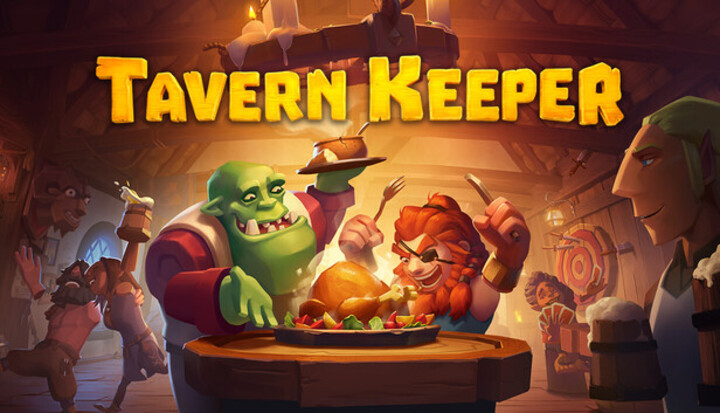
This guide explains how to approach Tavern Keeper step by step, from designing your first tavern and hiring employees to managing resources, improving customer satisfaction, expanding your business, and building a more efficient fantasy establishment.
1. How to Start Your First Tavern the Right Way
The first stage of Tavern Keeper should focus on creating a functional foundation rather than trying to build the largest or most impressive tavern immediately. Your first objective is to understand how customers, employees, rooms, furniture, food, and services interact with one another.
Start with the basic facilities needed to operate the business. Your tavern needs enough space for customers to sit comfortably, employees to work efficiently, and important services to be accessible without unnecessary walking.
When planning the first layout, think about movement. Customers should be able to enter, find seating, receive their orders, and leave without constantly crossing through work areas. Employees should also have short routes between storage, kitchens, service areas, and tables.
A practical starting layout should include:
• A clearly defined customer area.
• A compact service area.
• A kitchen or food preparation space.
• Storage for important resources.
• Enough seating for the expected number of customers.
• Clear paths for employees and guests.
Do not spend all of your resources on decoration at the beginning. A simple but efficient tavern can generate the resources needed for future improvements.
2. How to Design an Efficient Tavern Layout
Once the basic tavern is operating, the next step is improving the layout. In a management game, the distance between rooms can directly affect productivity because employees may spend valuable time walking instead of completing tasks.
Think of your tavern as a workplace. Areas that frequently interact with each other should be positioned relatively close together. For example, food preparation and storage should not be placed on opposite sides of the building if employees constantly need to travel between them.
Customer areas should also be separated from busy working areas when possible. This helps create a smoother flow and makes the tavern easier to expand later.
When designing rooms, consider four important questions.
How frequently is this room used?
Who needs access to it?
How far do employees need to travel?
Will this area need to expand later?
Planning for future expansion is particularly useful. Leave enough flexibility around important rooms so that you can add equipment, furniture, or additional workstations without rebuilding the entire tavern.
A good layout does not have to be symmetrical or visually perfect. Efficiency should come first, while decoration can be improved gradually.
3. How to Manage Customers and Keep Them Satisfied
Customers are the foundation of your tavern's income. They arrive expecting food, drinks, entertainment, comfort, and an enjoyable atmosphere. If their needs are consistently ignored, the business will struggle even if the building looks impressive.
Pay attention to what customers are requesting and how long they are waiting. Long waiting times can indicate that you need more staff, better equipment, improved room placement, or a more efficient workflow.
Customer satisfaction should be treated as a system rather than a single statistic. A customer may be unhappy because service is slow, because the environment lacks comfort, because the available food is limited, or because the tavern does not provide enough entertainment.
Try to identify the cause instead of reacting to the result.
For example, if many customers are waiting for food, adding more tables may make the problem worse. More tables create more demand, which can increase the workload on your kitchen and service staff.
Instead, improve the bottleneck first.
4. How to Hire and Manage Tavern Employees
Employees are essential to running an efficient tavern. As the business becomes larger, you will need workers capable of handling different responsibilities.
When hiring employees, do not focus only on adding more people. Think about which tasks are currently causing delays. If food preparation is slow, you need additional kitchen support. If customers are waiting too long for service, you may need more workers handling customer-facing tasks.
A useful way to evaluate staffing is to watch what employees actually do during a busy period.
Ask yourself:
• Are workers constantly walking between distant rooms?
• Is one employee handling too many tasks?
• Are some employees idle while another area is overwhelmed?
• Are important resources frequently unavailable?
• Are customers waiting even though enough employees are present?
These observations can reveal whether you have a staffing problem or a layout problem.
Adding more employees cannot always fix inefficient design. Sometimes moving equipment or storage closer to the relevant workstation produces a bigger improvement than hiring another worker.
5. How to Manage Food, Drinks, and Resources
Resource management becomes increasingly important as your tavern grows. Food, drinks, ingredients, equipment, and other supplies must be available when employees need them.
Avoid allowing your storage system to become chaotic. If important resources are difficult to access, employees may waste time searching or walking long distances. Organized storage can make daily operations much smoother.
You should also monitor which products are actually popular. There is little value in keeping large quantities of unpopular items while frequently running out of products customers want.
A useful resource strategy is to divide items into three categories:
• High-demand resources that should always be available.
• Medium-demand resources that can be maintained at moderate levels.
• Low-demand resources that should not consume too much storage space.
This approach helps prevent unnecessary spending and makes your supply chain easier to manage.
As the tavern becomes more successful, resource management becomes less about simply having enough and more about having the right resources in the right place at the right time.
6. How to Create a Profitable Menu
A good menu should balance customer demand, resource availability, preparation time, and profitability. Players may be tempted to offer as many different dishes and drinks as possible, but a huge menu can create additional management problems.
Start with products that your customers actually want and that your staff can reliably prepare. If one item is extremely popular, make sure the kitchen has enough capacity to support its demand.
You should also consider preparation complexity. A complicated dish may generate more value, but if it takes too long to prepare, customers may experience longer waiting times.
The best menu is not necessarily the one containing the most expensive products. It is the one that creates a sustainable relationship between demand, preparation, and revenue.
As your tavern grows, experiment with new offerings and observe their effects. If a new item creates excessive workload without producing meaningful benefits, reconsider whether it belongs on the regular menu.
This creates an important management principle: never judge a product only by its individual value. Judge it by how it affects the entire tavern.
7. How to Improve Your Tavern's Atmosphere
Once the business is stable, you can focus more heavily on decoration and atmosphere. This is where Tavern Keeper's creative side becomes especially important.
A tavern is more than a collection of functional rooms. The visual design, furniture arrangement, decorations, lighting, and overall atmosphere can help create a distinctive identity for your establishment.
However, decoration should not completely replace efficiency. A beautiful table placed in the middle of a major employee pathway may make the room look attractive while simultaneously making operations slower.
When decorating, try to separate decorative zones from high-traffic work areas.
You can create:
• Comfortable dining areas.
• Dedicated drinking spaces.
• Decorative corners.
• Entertainment areas.
• Themed rooms.
• Special areas for important guests.
This allows you to create a memorable tavern while preserving efficient movement.
The best taverns combine practical design with personality. Your building should work well, but it should also feel like a place where customers would actually want to spend time.
8. How to Expand Your Tavern Without Creating Problems
Expansion is an important milestone, but bigger does not automatically mean better. When you add new rooms, tables, equipment, and services, the complexity of your business increases as well.
Before expanding, make sure your current tavern is operating reliably. If the existing layout already has major problems, making the building larger can multiply those problems.
Expand when you have a clear reason.
You might need more space because:
• Customer demand is increasing.
• Your kitchen cannot handle the workload.
• You need additional storage.
• You want to introduce new services.
• Your current rooms are overcrowded.
• You want to create specialized areas.
When expanding, think about how the new space connects to the existing building. A new kitchen placed far from both storage and the customer area may create unnecessary walking.
Expansion should solve a problem rather than simply increase the size of the building.
9. How to Handle Busy Periods and Tavern Emergencies
As your tavern becomes more successful, busy periods become increasingly important. A small operation may function perfectly when only a few customers are present but collapse when demand suddenly increases.
The best way to prepare is to identify your bottlenecks before they become emergencies.
Watch your employees during busy periods. If one area consistently becomes overwhelmed, that area is probably limiting the performance of the entire tavern.
For example, if the kitchen cannot prepare food quickly enough, adding more seating may increase customer demand without solving the real problem. Similarly, if employees spend too much time walking, hiring additional workers may only partially improve the situation.
During difficult periods, prioritize essential services.
Keep customers served.
Keep important resources available.
Keep employees focused on critical tasks.
Avoid unnecessary changes during the busiest moments.
After the rush is over, analyze what happened. Use that information to redesign your tavern before the next major increase in demand.
10. How to Build a Successful Long-Term Tavern
The final stage of mastering Tavern Keeper is learning how to think beyond individual days. Your tavern should gradually evolve from a small establishment into a carefully managed fantasy business.
Long-term success depends on balancing several systems at once: customer satisfaction, employee productivity, resource management, menu design, room layout, atmosphere, and expansion.
Do not try to optimize everything simultaneously. Instead, identify the weakest part of your tavern and improve it first.
If customers are unhappy, investigate their needs. If employees are inefficient, examine their routes and workloads. If profits are weak, analyze your menu and resource costs. If the building feels crowded, redesign the layout before adding more furniture.
A strong long-term strategy follows a repeating cycle:
Build a functional tavern.
Observe how customers and employees behave.
Identify the biggest bottleneck.
Improve the relevant system.
Monitor the results.
Expand only when necessary.
Continue refining the design.
This approach allows your tavern to grow naturally instead of becoming increasingly difficult to manage.